

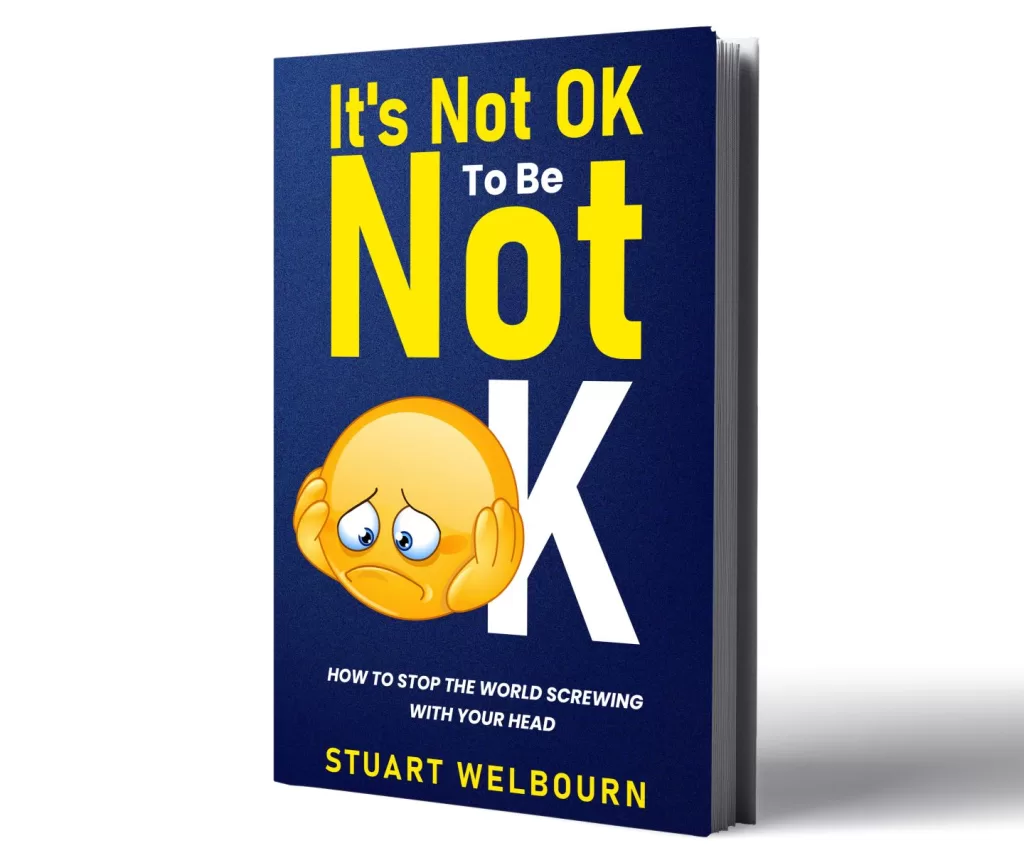
Tired of Being Told “It’s OK to Not Be OK”? Here’s What No One Else Will Say
Forget sugar-coated advice. It’s Not OK to Be Not OK dismantles the myths around mental health — including the tired line that “it’s OK to not be OK” — and shows you how to reclaim your resilience, one blunt but compassionate step at a time.
This isn’t just another self-help book — it’s for real people.
- The ones waiting for mental health appointments that never come.
- The ones scrolling past self-help advice that sounds good but changes nothing.
- And the ones who see the bigger picture — that our whole culture is struggling, not just the “one in four.”
If that sounds familiar, this straight-talking guide will help you cut through the noise and start building real resilience.

Why Listen to Me?
I’ve worn a few hats — Royal Navy, therapist, filmmaker, and now author. What ties it all together is a drive to understand how people work, why we struggle, and how we find our way back. I don’t do sugar-coated advice — or psychobabble. I’d rather cut through the clichés and share what actually helps, written in plain, simple language anyone can follow. This self-help book is part of that journey, shared so you can walk yours a little lighter.
Straight Talk. Real Help.
Here’s what makes this self-help book different from the rest:
- Speaks to you like a friend, not a textbook.
- Gets you out of the loop of overthinking and into action.
- Offers a different way of looking at mental health — one that makes sense of why the world feels the way it does.
- Helps you rebuild resilience without needing perfect conditions.
Here’s what early readers are saying
“Good and also funny.”
“Made me laugh out loud, totally enjoyable, and written in a way anyone can understand. Loved it — fucking ace actually.”
“Halfway through this book, finding it very good with a no bullshit attitude!”
Want to share your thoughts? Leave a review on Amazon.
Not ready to buy? Get a free chapter on me.
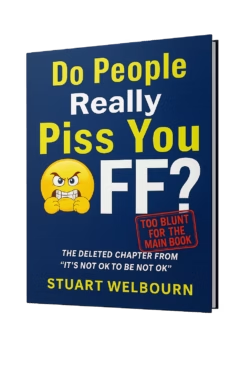
Look, you don’t know me yet. I get it. Rather than ask you to risk your money straight away, here’s a deleted chapter free. Read it, see what you think, and if it speaks your language, the book’s only a click away.
Pop your email in below and I’ll send it straight over.
Questions you might have
Who’s this book not for?
If you like your self-help sugar-coated, this isn’t for you. I write the way I talk — straight to the point, with the odd swear word thrown in when it fits. Some people love that honesty, others don’t. If you’re looking for something polite and polished, there are plenty of other books out there. If you want blunt but compassionate truth, you’ll feel at home here.
Do I need therapy to use this book?
No — and this book isn’t a replacement for therapy either. If you feel you need professional support, I’d always encourage you to go and get it. I worked as a therapist for 13 years, so I know first-hand how valuable it can be, and I even share ways you might find affordable or free options. But this book stands on its own. You can pick it up, read it in plain English, and take away ideas you can start applying right away.
Is it just another “it’s OK to not be OK” book?
Not at all. That’s actually the very message I push back against. Telling someone “it’s OK to not be OK” might feel comforting in the moment, but it doesn’t help you move forward. This book is different because it goes past the slogan and gives you seven practical ideas you can actually try out. No theory for theory’s sake — just grounded advice you can put to work in your own life.
What if I don’t usually read self-help books?
Honestly, that’s who I had in mind when I wrote it. A lot of self-help can sound like it was written in an ivory tower — full of jargon, psychobabble, or stories that don’t connect with real life. I didn’t want that. So I kept the language simple and down-to-earth, the kind of style you’d expect if we were having a conversation over a coffee.
Will it actually help me?
That part’s up to you. No book, mine included, is a magic fix. What I can give you is a set of straight-talking ideas, tools, and perspectives you can try out for yourself. Think of it as a guide that points you in useful directions rather than something that “solves” everything. If you’re willing to take the ideas and run with them, you might find they help you get your head back in gear.
Take back control of your head.
This isn’t about quick fixes — it’s about practical ideas you can actually use. Choose your format and get started.