We Brits love a bit of hero worship. Back in 2010, I wrote a piece asking when the hero bubble would burst — when we’d stop turning sacrifice into slogans. Fifteen years on, not much has changed. The faces are different, the marketing’s slicker, but the pattern’s the same. What follows is that old article, along with a look at how our obsession with heroes has evolved — from the charity wristbands of the 2010s to the clapping and hashtags of lockdown, and what it all really says about us.
Table of Contents
How Long Until The “Hero” Bubble Bursts? (13/10/2010)
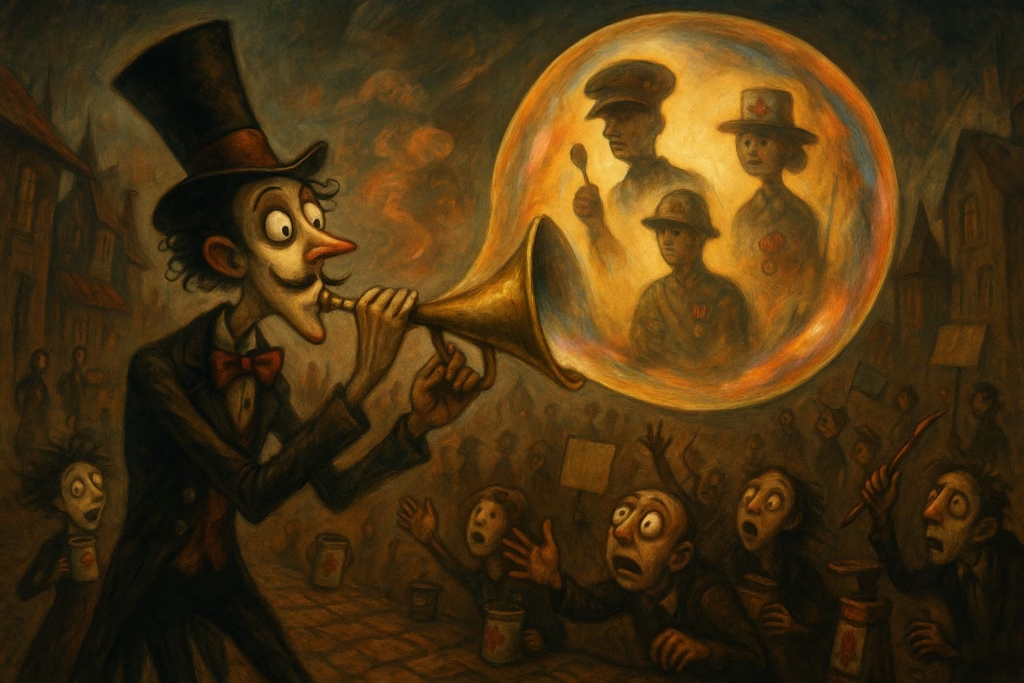
With more and more people attaching themselves to the success of Help for Heroes, it is virtually impossible to go a day without encountering the word “Hero”. This could very soon have a detrimental effect on those who should be benefiting from it, and are some just exploiting injured service personnel for their own means?
As someone who has never bought a tabloid newspaper or rarely watched TV just because it was there, I was only vaguely aware until recently that there was a charity called Help for Heroes. I knew it was set up by an ex-squaddie and his wife and that it was raising money to help injured servicemen. I was also only vaguely aware of BLESMA, which also helps limbless servicemen, having been around for many years, but not receiving as much media attention.
So as far as I was concerned, this was just another great organisation doing great work, and I would be more than happy to make a donation if I encountered a collection tin on my travels.
It was only around September 2009, when I was conducting research for a project to help Self-Employed Veterans (myself being one) become more successful, that I discovered how large Help for Heroes had become. (As I write this, they must be close to rivalling the Royal British Legion if not overtaking them for direct donations.)
I can only commend Bryn and Emma Parry for doing such a sterling job of bringing the plight of injured service people into the media limelight.
I’m not sure if they came up with the name themselves, but it is a brilliant piece of marketing when compared to the names of some lesser-known charities. It does “exactly what it says on the tin”, as they say.
However, the name came about, I would imagine that the choice of the word ‘Hero’ was well-intentioned and not hype dreamed up by some PR expert; after all, anyone who is injured while serving their Country is indeed worthy of the label ‘Hero’.
However, when you have a great concept, it is important to protect it and not to get too carried away with how it is used; sometimes, to use another cliché, “less is more”.
A Slice of the Proverbial Pie
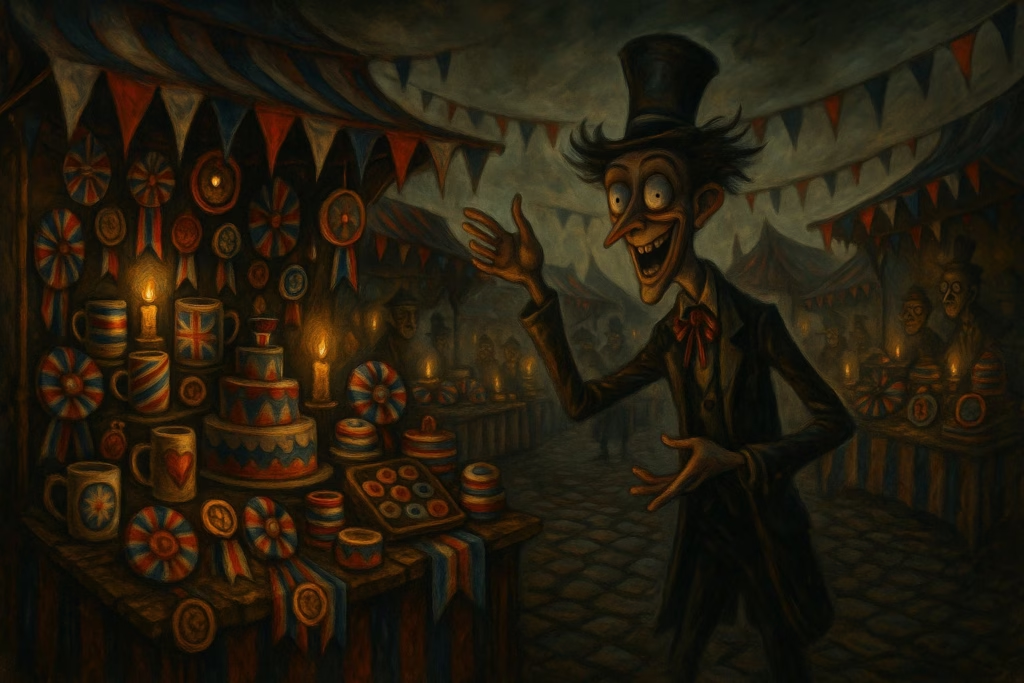
The trouble is that now everyone is jumping on the bandwagon. Type in the term “for heroes” into a search engine, and you will see what I mean.
Now you may be thinking, What is wrong with that? The more that is done for these people, the better. I couldn’t agree more, so allow me to elaborate.
I’ll get my cynicism out of the way first about some people’s support.
To clarify what I’m about to say, I’m not talking about tax write-offs or big corporation sponsorship deals, as this is just how it is. Without them, most charities would not survive very long. Personally, I have no problem with this at all, because in those instances, you are dealing with a corporation, not an individual. Even smaller businesses typically have a relationship with a local charity or at least a genuine connection to a cause.
No, my concern is about how integrous some small business owners’ real intentions are for supporting the troops. Is it really an altruistic offering?
Having studied marketing for the last couple of years, one of the things I’ve learned is that sometimes you have to make a loss in the short term to make big gains in the future.
For example, let’s say you are a small business owner who makes thongs and is not doing particularly well due to the economic downturn. You look for ways to increase your business’s exposure by seeing what is popular at the present moment. You think to yourself, “I know, I’ll make some thongs in the ‘Help for Heroes’ colours and donate all the money to that cause.” (I believe you would actually have to get permission to do this from the Parrys or one of their representatives, but I’m not 100% certain.)
So, you launch “Thongs for Heroes” and donate all the money to the cause, making a loss or breaking even if you only donate the profits. Because now you have been perceived to be generous by doing something good, you find that the rest of your catalogue of thongs suddenly starts selling better. (The same thing could be said about some (not all) musicians and celebrities who support a cause and then their back catalogue of albums suddenly starts selling again, or a flagging career is miraculously salvaged.)
If you are perceived to be attached to something important or popular in any way, shape, or form, then by default, this will rub off and give you social proof because people will think that you must also be important or popular. If you don’t want to take my word for it, I recommend you read some of Professor Robert Cialdini’s work on the subject of how we are all unconsciously influenced.
Disclaimer: It took me a while to find an example that didn’t already exist. The words “thongs for heroes” were the first words I used that did not bring any results in Google. (What that says about my mental association processes disturbs me!)
So if there really is such a thing going on, this does not mean I am implying that they are who I am referring to, and I apologise for any offence caused. They may well be a selfless company, so don’t let my article dissuade you from using them.
Hopefully, they don’t exist; my point is that, in my opinion, in this vast country of ours, some will take advantage of the popularity of the word “hero” for their own gain. I could even be accused of it myself for using it reluctantly in a previous article, entitled “Zero for Heroes”.
Okay, now that I’ve addressed the scepticism part, allow me to proceed with the main point of this article, which is why the “hero” bubble could burst and why I think the Parrys would be wise to restrict who they allow to use the term.
Out of Sight, Out of Mind.
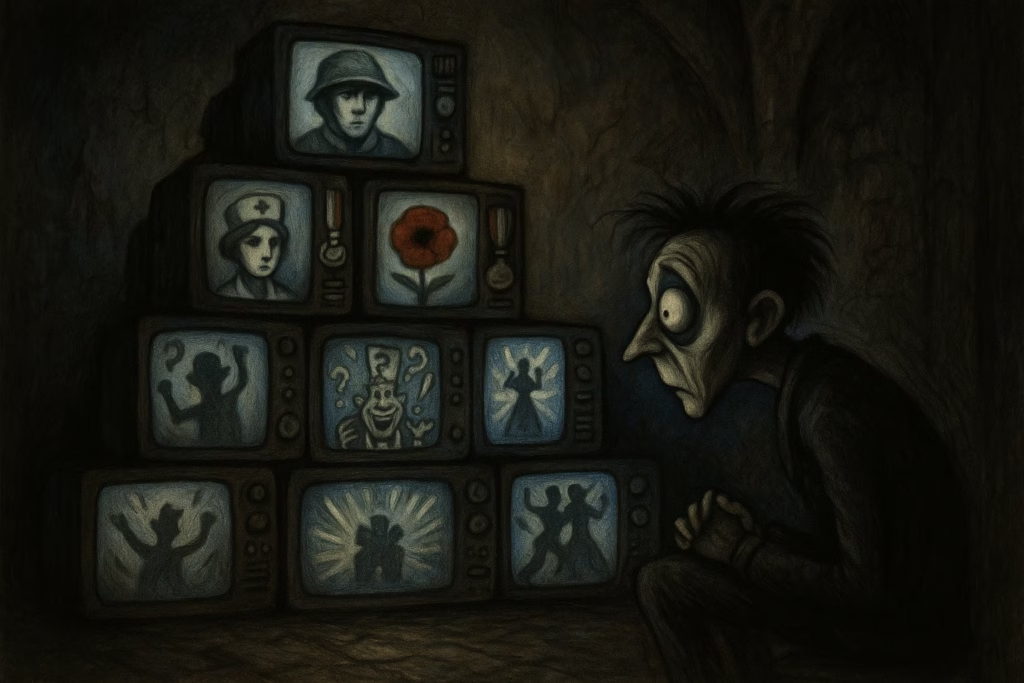
Firstly, let’s just remember that the tabloid media is fickle, a business and only interested in selling papers that the public wants to buy. Today, one thing may be top news and really well-liked, but tomorrow it may be the complete opposite. Just look at England Football Managers; today, a “refreshing force”, tomorrow they stick a turnip on your head!
So right now, whilst we are involved in Afghanistan and Iraq, it is a hot topic in the news, because every day British Service Personnel are being injured or killed.
Although the politics for why we are there in the first place may be questionable, the majority of the Great British public are intelligent enough to realise that when we serve our country, we do not get to choose which wars we fight in. Therefore, I think there really is more genuine public support for the Troops than in any previous conflict.
But what happens when we withdraw from these areas (if we are not involved in another country by then)?
When this does happen, all that will be newsworthy will be who is cheating on whom, who is going to win the next reality show for their 15 minutes of fame and how we are being screwed by one of the political parties, until the new “fad” arrives.
The popularity of heroes will have had its day.
The Ozone layer had its turn; global warming is still on the fringes, along with genetic modification. What will be next, I wonder?
Apart from those directly connected to or affected by these Wars, the rest of society will simply forget about it and get on with their lives, only remembering once a year when the poppy tins appear.
The Seeds of Dissent
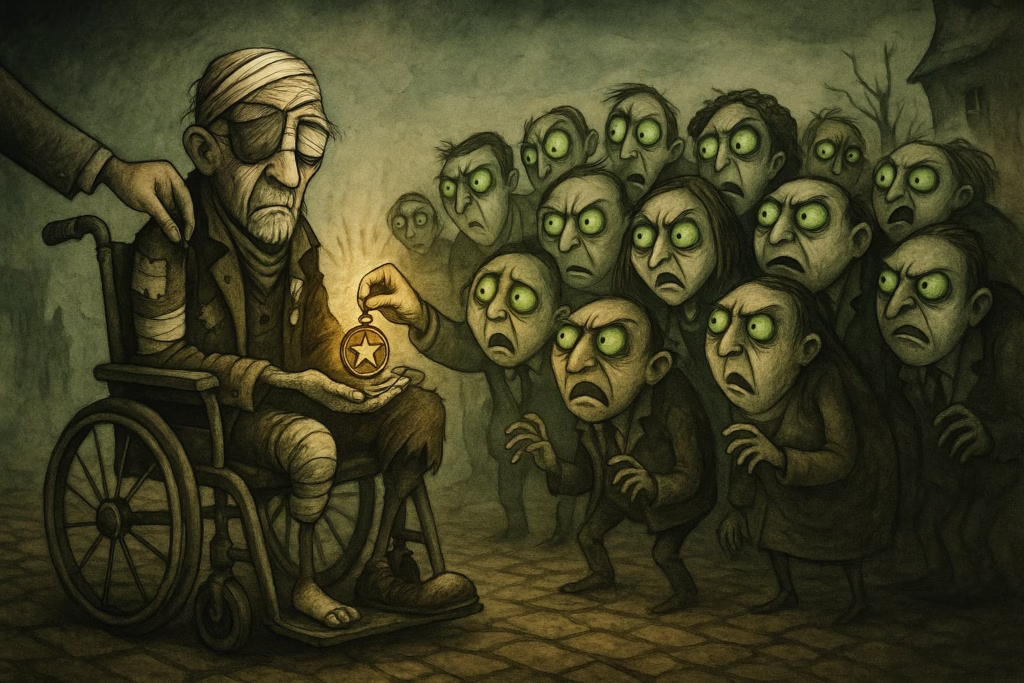
Recently, I joined a Military Forum and some of the comments I have read assured me that I was right that we are heading in the eventual direction of a “bubble burst”.
I’m certain that you would struggle to find anyone who has been in any of the Armed Forces who actually refers to themselves as a Hero. It may be implied about a buddy who saves your life, but ultimately, it is not a label that many want to wear.
A comment on the forum by someone currently serving said something along the lines of “Does the term serviceman not exist anymore?” They then went on to say that “they were getting sick of hearing the word hero everywhere”.
If something is too commonplace or overused, it will normally have one of two effects:
- It will become invisible
- It will become annoying
Other comments I have read from non-service personnel reinforce what I am saying, and here are some broad examples:
A comparison of public sector jobs to the Armed Forces, because they too serve the country: Whilst I agree they do a great and sometimes dangerous job, it is not a fair comparison by a long stretch.
“We choose to join the armed forces”: This is true, and I’m sure no one serving would disagree.
Everyone is going through tough times at the moment: Not everyone, but even the majority of those who are; I’m sure will have all their limbs intact.
I believe this is because, in this time of economic uncertainty, people are hearing of things such as free tickets to football matches, special deals on cars, etc., for those coming back from a War Zone, and many use the term “for heroes” rather than just coming up with their own business names or doing it anonymously.
For some who hear of these freebies, their egos are kicking in, the green-eyed monster is raising its head, they are regressing back to their childhood behaviours when they didn’t get their own way and thinking “I want to go to the football match, but can’t afford to; it’s not fair!”
My quick answer to those who think that way is simple: sign up and go to War then!
A longer answer is that I know for a fact that many other Public Sector workers receive special deals on items such as gym memberships, certain insurance policies, private healthcare plans, and more. So just because your “perks” are not as exciting, there is no need for sour grapes, is there? Let’s face it, if you are serving in the Army, I would imagine that life insurance premiums are quite high these days compared to those of a plumber.
Most private companies offer their own perks, whether this is in the form of in-house discounts, Christmas/productivity bonuses or “team building” days out.
When you are in the Armed Forces, there is no overtime, no Christmas bonus, and your team-building days out are probably in theatre! You are paid and owned by the Crown (or Government) 7 days a week, 365 days a year.
The real trouble is that when some people start thinking in those ways, it won’t be long before it spreads as people idly talk. It may start off as mere neutrality before it develops into resentment, which may eventually lead to outright condemnation or, in the worst-case scenario, actual hostility. (Look at how Vietnam Veterans have been treated in the past. Despite what we see in the movies, I’m sure they didn’t all go around raping and butchering.)
In this technological age, ideas and opinions can spread across the globe almost as quickly as the speed of light.
Ideas do not need to be researched, provable, or logical for them to take hold in the majority of a population and become widely accepted beliefs.
Once someone “believes” something, well, now you have real trouble!
The evolutionary biologist Richard Dawkins coined the term “Memetics” in his book The Selfish Gene to describe the spreading of ideas in a culture; for further exploration, you may want to look into this concept.
No one likes to be wrong, everyone is an expert on everything, and so most people “believe” they are right in their opinions and will defend them to the hilt or insist you agree with them by whatever means necessary.
(This strikes me as tragically ironic, because it is mainly due to “beliefs” that our Troops are fighting in Wars in the first place).
Catch 22
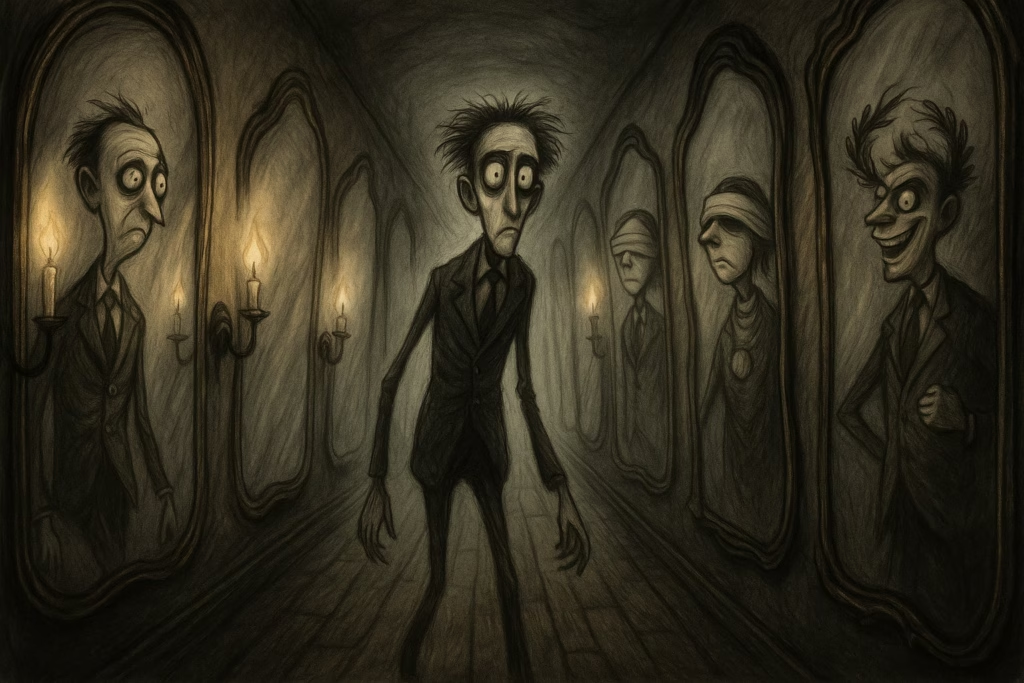
If the ideas that I mentioned that have been posted on the forums are spreading, then I think it would be extremely prudent for the Parry’s – if they are capable of doing so – to keep a tighter rein on who uses the “for heroes” tag so as to not confuse the injured with those who have served; before “Hero” becomes a dirty word. For if it ever does, their great work would unravel, and those they set out to help would become victims of war for the second time in their lives.
To those who genuinely want to help the armed forces community, whether injured or not, I say this: Please come up with your own name that does not include the term ‘hero’.
And to those who are jumping on the bandwagon for their own selfish need, I say “shame on you!”
This, of course, is simply my “belief” about what could happen, and as a human being, I, too, “believe” myself to be right.
There is a difference, though; “the mind” and “human behaviour” have been my field of study since 1996. I am therefore open to changing my beliefs when evidence is available to the contrary. I don’t expect you to just simply take my word for it, and I definitely and sincerely want to be proved wrong in this instance.
If I am right, though, how long until the “Hero” bubble bursts?
From the Parade to the Pandemic: What We Still Haven’t Learned About Hero Worship
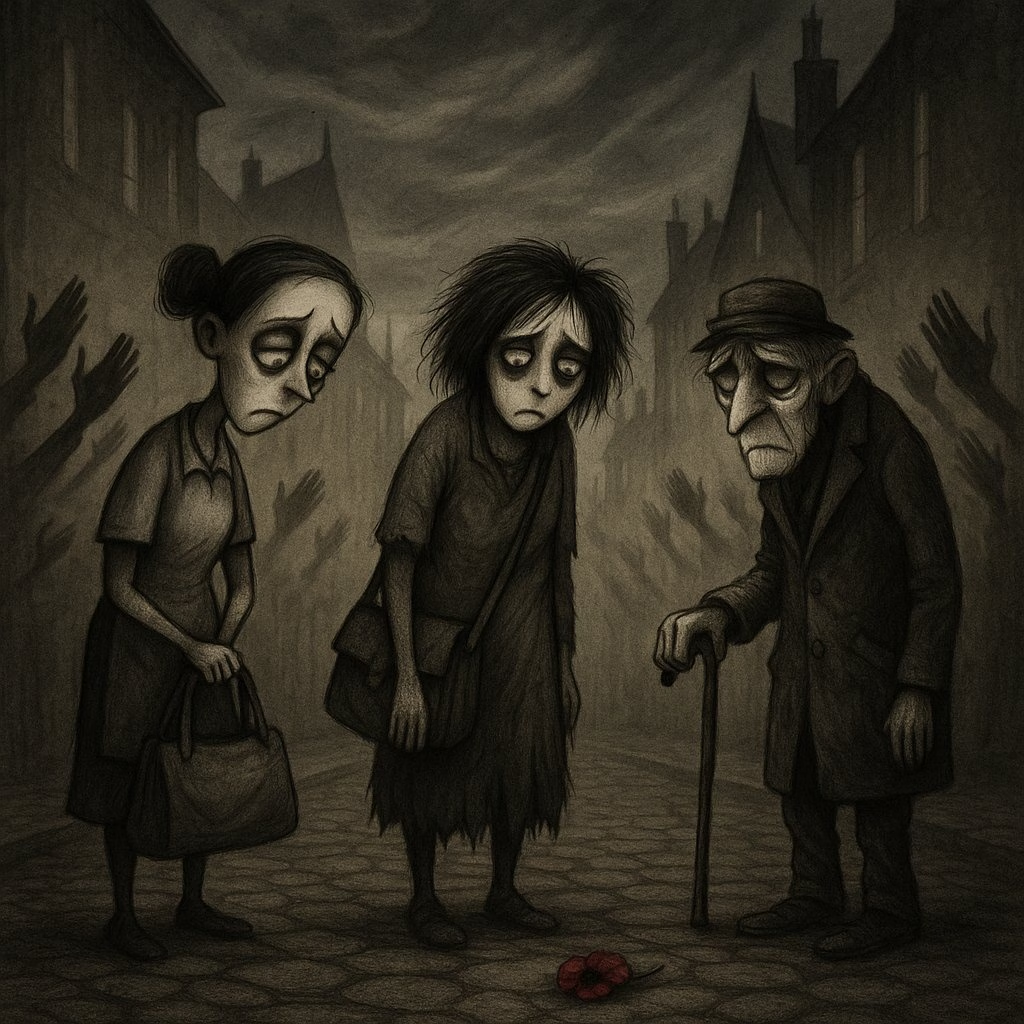
When I wrote that piece back in 2010, I thought I was being a bit cynical. Turns out I was being optimistic. I said the “hero bubble” would burst once people got tired of the slogans and the fundraising fatigue kicked in. What I didn’t see coming was how good we’d get at reinventing the same thing under new names.
The bubble didn’t burst; it just changed shape.
We swapped wristbands for hashtags, medals for selfies, and now every crisis comes with its own round of hero worship. During the COVID-19 pandemic, it was NHS staff, delivery drivers, and shelf stackers. For a few weeks, everyone was out on the doorstep clapping like trained seals. It felt like the country had rediscovered its heart for a moment. Then the restrictions lifted, the bins overflowed, and people went back to arguing about masks and politicians. The noise came back, and the silence – the one that mattered – vanished again.
That’s the thing about hero worship. It’s not really about the people doing the hard work; it’s about us. It’s about needing to feel like we care without having to do much about it. We perform our compassion for a bit, post something online, maybe share a poppy image, and then get back to whatever’s next on the outrage calendar. The heroes get left behind to deal with the fallout, same as always.
The irony is that most of the people we call heroes would never use the word themselves. They’re too busy trying to get through another shift, another night, another flashback. Whether it’s a nurse on a ward, a carer at the end of their rope, or a veteran who still can’t sleep properly thirty years later, none of them need statues or slogans. They just need to not be forgotten when the clapping stops.
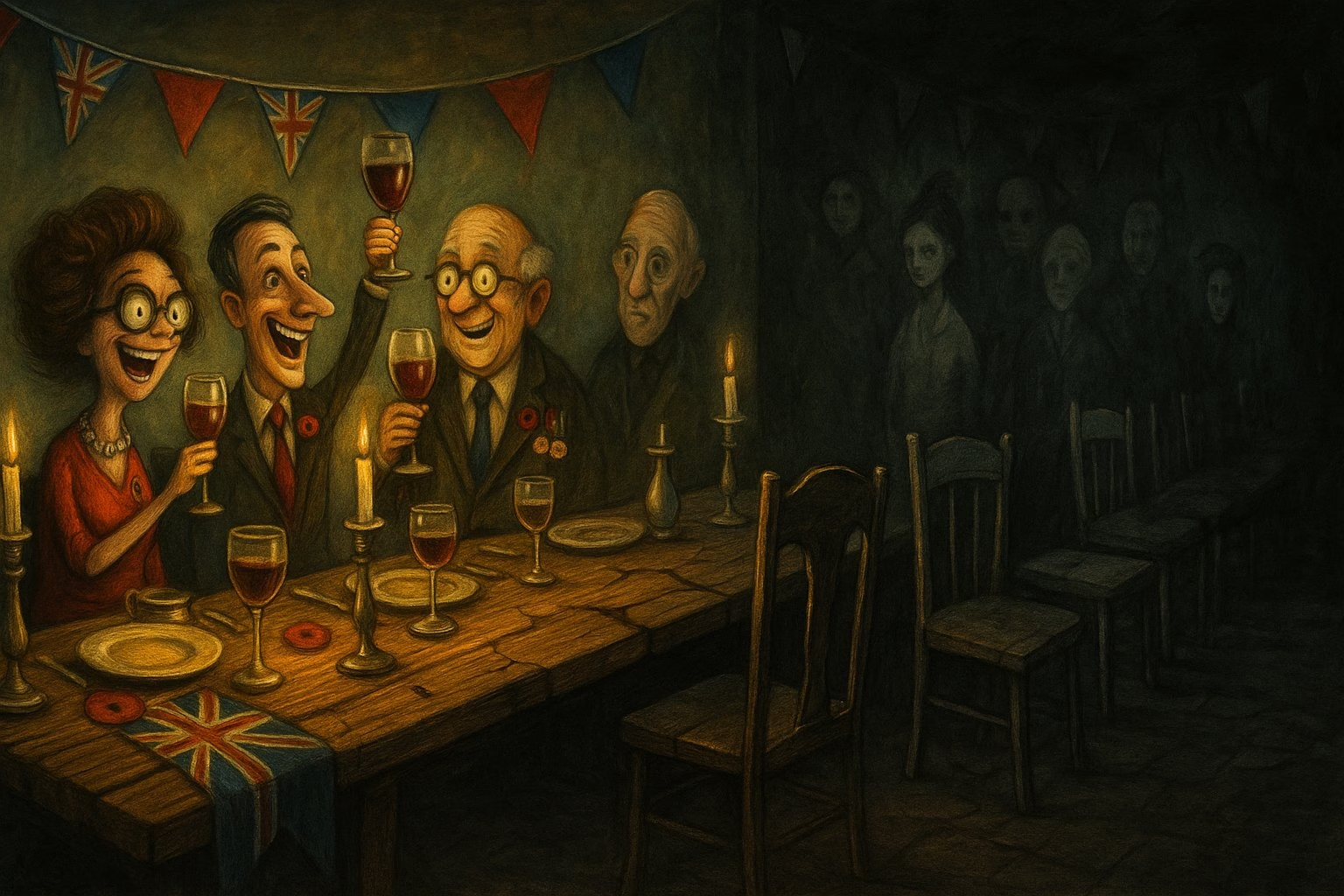
And yet, here we are again, another November, another wave of posts and poppies and patriotic adverts. Remembrance is supposed to mean remembering. But too often it’s become a kind of seasonal empathy, a two-minute timeout before we get back to Christmas shopping. We’ve turned honouring sacrifice into another annual performance. And if that stings, it’s probably because deep down we know it’s true.
I wrote a book in 2011 to help veterans dealing with PTSD. Back then, I donated my share of the sales to a military charity because I didn’t want to profit from other people’s pain. These days, I’m not even selling it; I’m giving it away free. No signup forms, no marketing ploy. Just download it and use it. It’s my way of doing something real, instead of just talking about it.
If you know a veteran who’s struggling, send them this link https://www.ptsdandveterans.com/ptsd-survival-guide.html
Maybe that’s what we’ve still got to learn. That remembrance isn’t about ceremony, it’s about consistency. It’s not just the fallen who deserve remembering; it’s the ones still fighting their wars quietly, long after the cameras moved on.