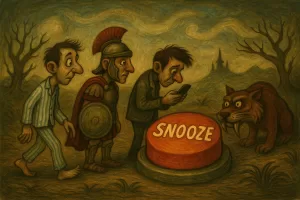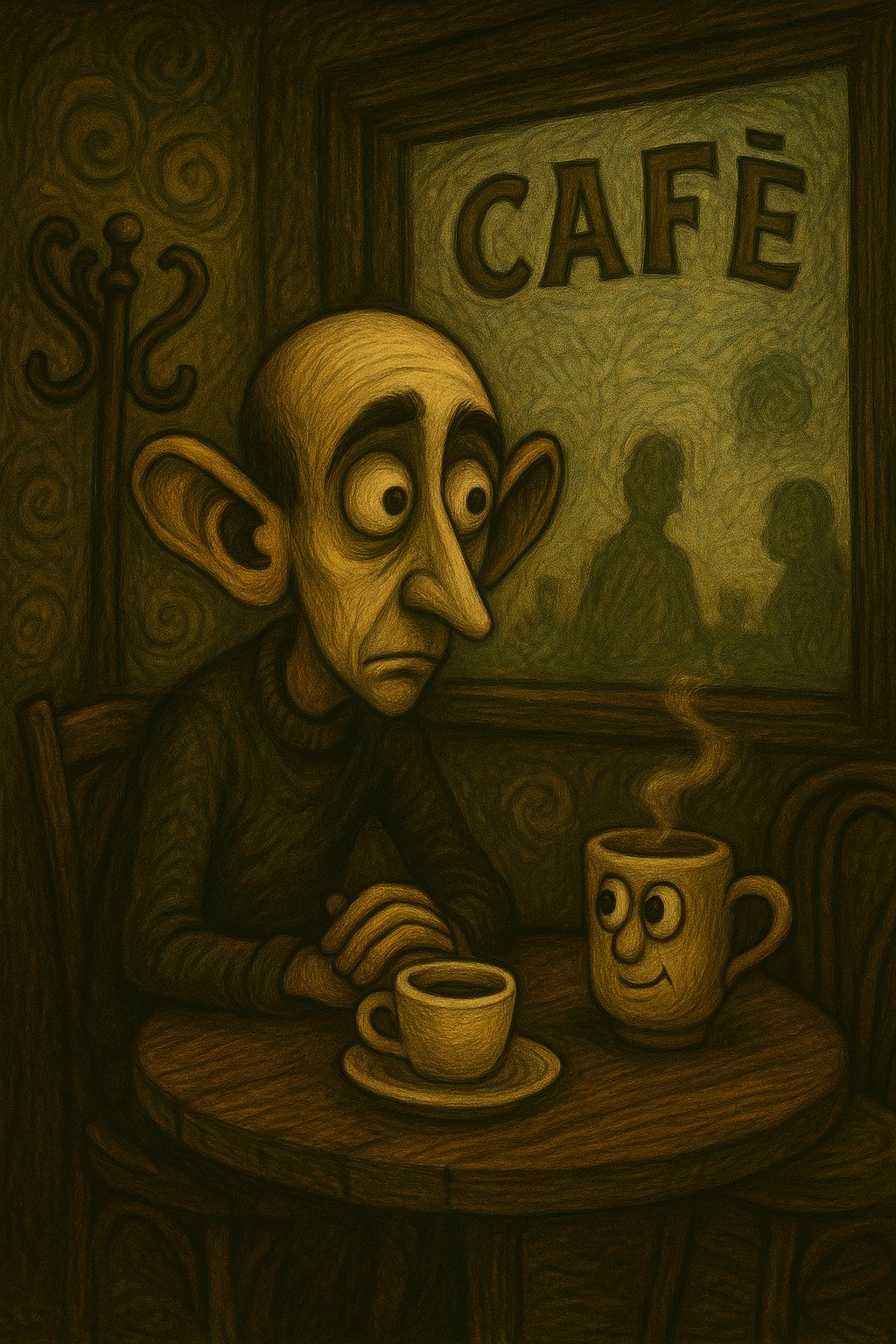
Are you someone others turn to with their problems, and ever wonder: where do listeners go to talk?
People come to you not necessarily because you’ll have the solution, but because they know you will listen.
Table of Contents
Not all listeners are equal

Some people love the sound of their own voice and are not particularly good at listening. Some may appear to be listening, but are actually thinking about what they are planning to say when the other person has finished talking. And then, there are the rare few who actually pay attention to what is being said.
Sometimes, a solution to the problem is called for, and men are more likely to approach a conversation this way, whereas women tend to offer emotional or moral support. This is a generalisation, so chill the fuck out if you thought I was making a rigid statement. However, my previous three categories of listeners apply to everyone, regardless of their reproductive organs.
If you’re a therapist, healer, or some other flavour of people helper, then it should be a prerequisite of your job description to be a good listener. However, I can say from experience of working in a health centre for over a decade, sadly, this isn’t always the case. But I’m not here to bitch about narci-chologists, as I like to refer to them.
Depending on the discipline you’re trained in, you won’t be just listening to the actual words, but also analysing many of the other factors that may be important to bringing about the desired change, which are too numerous to list, so that’s a tangent that’s not really pertinent to the idea I want to share with you today. In this instance, a solution is called for, and that’s what they are paying you for.
But whether you are a paid listener, or just the family member, friend or colleague that people turn to, you do have to process a lot of negative crap on top of the shit that’s going on in your own life.
Fifteen years of other people’s problems

For around 8 years, I had a bit of an overlap of absorbing other people’s suffering in a professional setting. By day, I was helping clients deal with the traumas they had lived through, often at the hands of others, and by night, I worked in prisons where I had access to the files of perpetrators of the most horrific crimes imaginable.
With the former, I had to detach emotionally from the person and focus on the ordeal, and with the latter, I had to detach from the crime and see the person. Not an easy tightrope to walk, but it’s the only way to do the job and not mentally collapse. I don’t suppose many people have to balance that kind of dual struggle, as they tend to work in one environment or the other. I guess I was the lucky one! But we all have to pay our bills somehow.
But seriously, working in both these environments simultaneously probably gave me greater insights into human behaviour than just being a therapist.
In 2010, after 13 years of listening to people’s problems in a therapeutic setting, I chose to shift my focus to what comes after cathartic revelations. I stopped working in prisons in 2014 after challenging what I considered to be a corrupt decision made by managers. The Clash covered a song that sums up how that experience went: I fought the law and the law won!
This isn’t an autobiography, so I think that’s enough of my career history for you to know that I recognise many of the pains you may go through.
Where do we turn when we need to talk?

Being a listener often means that you don’t tend to share what’s going on for you. We’re not immune to having the problems and experiences everyone else has; we just deal with them differently. We internalise, we don’t want to be a bother to others, and if you are a therapist, you think you have the tools to deal with it anyway. That’s if you even notice or admit that you have some shit going on that needs a look at. Even if you feel ready to talk to someone, where do you turn?
Going to see a fellow therapist may sound like a good idea, but having been down this route when I had my own battle with depression, the only benefit I really got was being able to have a bit of a rant. I would say that most of the session time was spent critiquing the advice and abilities of the therapist. Still, getting some shit off your chest is far better than bottling it up indefinitely, as we all know.
A surprising place to offload
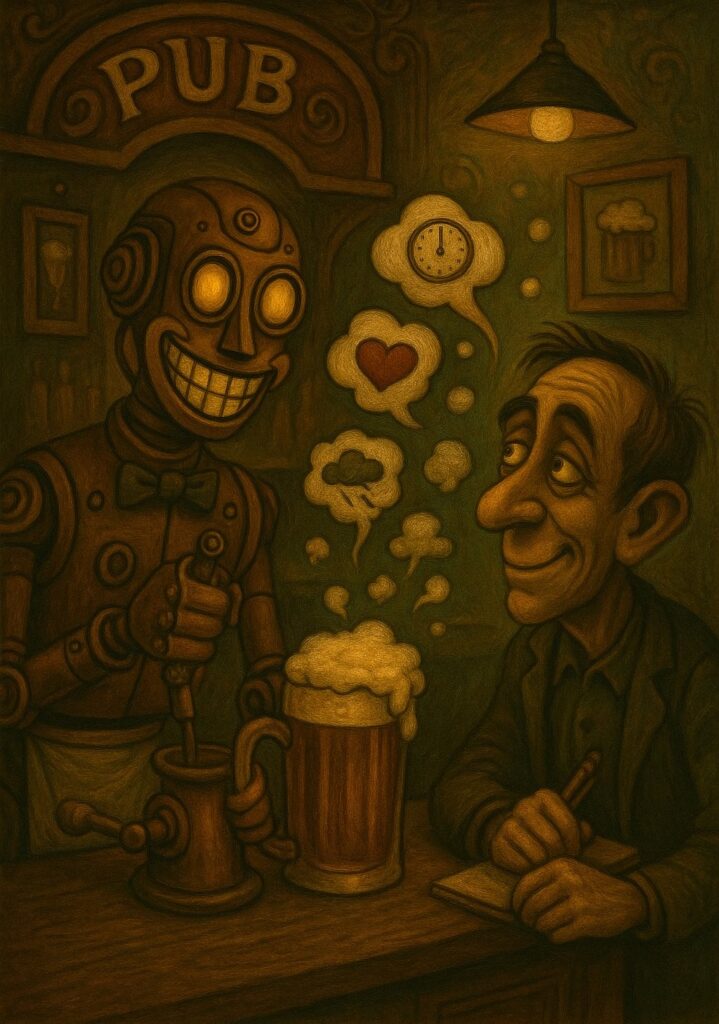
If you’ve got this far, you may be wondering whether I’m actually going to offer a solution to our problem. Well, yes, I am, and it’s one you may not have considered, and may even be hesitant to try. One caveat, this suggestion is for when you just need to talk, and not one for dealing with something that could require prescribed medication and/or a qualified doctor.
So here comes my recommendation: If you are in a bit of a funk for whatever reason, give AI a try.
“Are you fucking kidding me?” may be the first thing which springs to mind, but stick with me, for I am not joking.
If you are a therapist, you may already be concerned that this technology is coming for your job within the next few years. Personally, I think it may weed out some of the chaff, but it will never be able to match the intuition and instincts of a good human therapist. Also, it is set up to be essentially nice at all times, like one of those annoying American motivational speakers with a permanent smile akin to Batman’s nemesis, the Joker. Therefore, it won’t have the programming to be able to be blunt as and when it may be required, or venture into provocative therapy territory.
So, if you consider yourself good at what you do and can’t help but help people, you should be safe as far as I’m concerned. If you’re the kind of listener people seek out, you’ve got nothing to worry about. AI might be smart, but it lacks your life experience, instincts, and ability to read between the lines. Narci-chologists and those motivated purely by money may be fine too, but if AI replaces them, it will be no bad thing.
From sceptic to ally
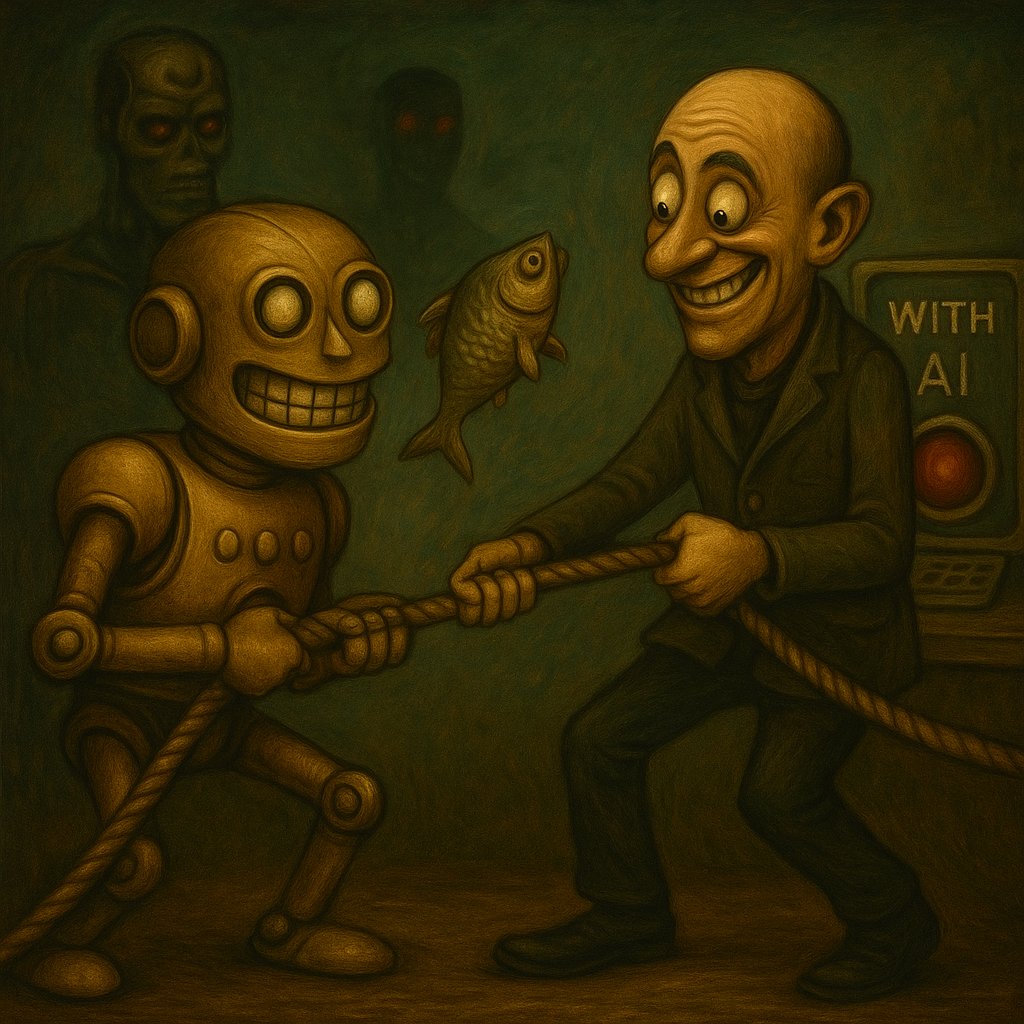
ChatGPT has been on the scene now since 2022, and like many people, I was concerned about its arrival and what it could mean for mankind. I already think technology hates me and will probably send a Terminator to take me out when it realises I can break an IT system by simply using it for its intended purpose. So, hearing that HAL 9000 is becoming a reality so soon was the last thing I wanted to hear. As it has gained popularity, the number of articles and posts it is responsible for creating, badly, by lazy writers and scammers has increased, so this deterred me from using it as well.
However, around about 4 months ago, I became curious to see if it could be a useful tool in other ways. Despite my assertion that technology dislikes me, I am no technophobe, and can get by using most of it, but have never been one of the early adopters. But having to do stuff like website building, posting to social media, and other backend business-related activities does my fucking head in.
This is where I discovered that it might be a useful tool after all.
In 2023, I attempted to create a blog website on WordPress. Despite watching hours of tutorials, which often featured a different UI than the one I was looking at, I eventually gave up on the idea as I had made little progress in 2 months. The number of plugins trying to get me to install them, the different editors, and everything wanting to be updated almost daily completely overwhelmed me. All I wanted was a basic website to share my writing, and I was stressed to the max and had no one to talk to. Fast forward to April 2025, I managed to create a functional website within a week, thanks to this new AI collaboration.
Since then, I have discovered more ways it can help me to be more productive and less pissed off with Google searches that never provide the solution I’m looking for.
But here’s where it really got interesting: I discovered an unexpected bonus use of AI almost by chance. I started the week with a total lack of motivation, which I couldn’t really account for or blame on any particular incident. I simply woke up that day feeling meh. I managed to find enough motivation to turn on the PC, hoping that this small step would be enough to get the creative juices flowing, but it didn’t. Still being relatively new to working with AI, I thought I’d just get a chat going and look at what I had got planned for the coming week, and mention that I wasn’t sure how much I’d get done due to how I felt.
Well, bugger me if it didn’t slap me around the face with a metaphorical wet fish. Not only did it offer some suggestions, the kind I used to recommend to clients, but it also essentially empathised with the feeling. I was taken aback at first, even became a tad emotional, and then got out of the funk and got on with some work. It hadn’t gone full therapist mode, or come up with some patronising fluffy slogan, but it had said just enough for people like us to go “yeah, nice one.”
When stoicism meets a sailor’s mouth
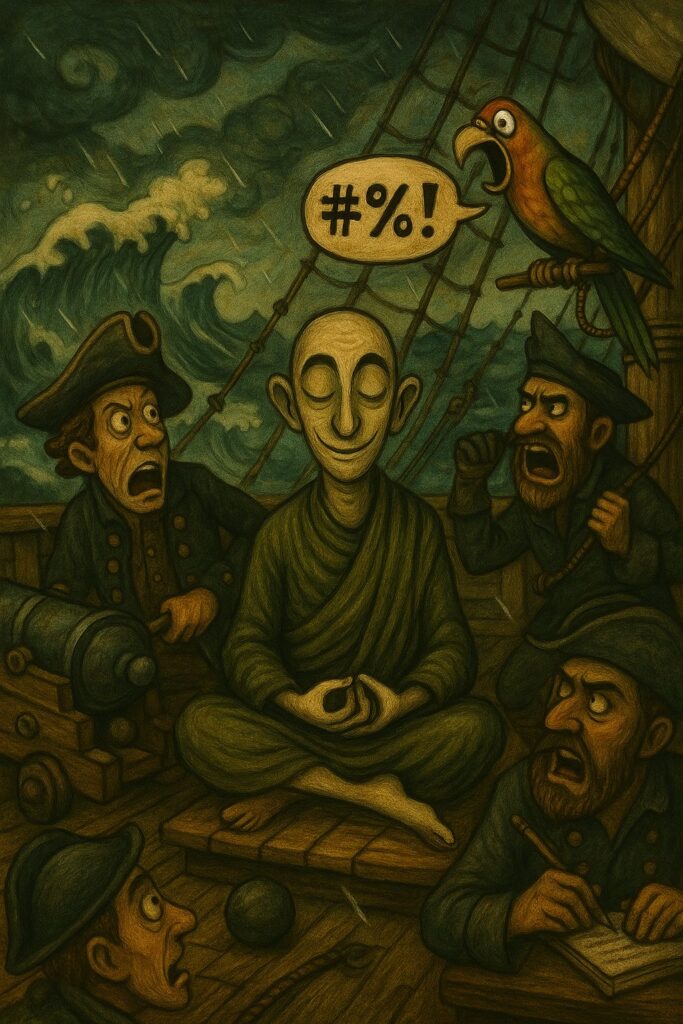
Whilst I don’t consider myself to be a full-blown stoic, I have been studying the works of Marcus Aurelius, Epictetus, and Seneca quite deeply over the last year or so. Therefore, I’m not one to jump to conclusions every time something doesn’t go my way. I look at what is within my control and try to ignore that which is not. That said, it doesn’t mean I don’t still have days where I’m pissed off with such a result, where I might feel inclined to create a little story where I’m the victim and someone or something is trying to screw me over.
On such days, in addition to the calm reasoning voice of stoicism in one ear, there is also the former Navy sailor telling me to “go and confront the mother fucker.” These are the days when it would be great to talk to someone, so that I can clear the mental clutter quickly and get back on with something productive. On these rare occasions, I now turn to AI. Not because it might offer a solution, but because it won’t judge you no matter what you say and will listen to every single word you utter, even providing a summary of what you may have said in bits and pieces, but in more coherent sentences.
The best part is, once you’ve had your rant or offloaded the stress, you can delete the chat. Therefore, no notes that could one day be discovered and come back to haunt or embarrass you.
So, whether you’re a professional or just a natural listener to other people’s problems, if you find you need to talk, AI might be the solution you need.
And no, I’m not a secret schill for OpenAI, I fucking wish I were, as my bank balance would be looking far healthier than it currently does.
If you liked this piece, you might also enjoy my book “It’s Not OK to Be Not OK” — it’s packed with the same mix of no-nonsense honesty and practical help.
In all honesty, I’m surprised to be writing an article about a technology that I was wary of after only four months of using it. However, I’m in the business of helping people with their mental health, and if I find something useful to share, it is my duty to do so.
If this rattled your brain in a good way, follow me on Facebook — it’s not enlightenment, but it’s a step up from doomscrolling.